Big Red Book
Celebrating television's This Is Your Life





The Bee GEES - Barry (1946-) Robin (1949-2012) and Maurice GIBB (1949-2003)

THIS IS YOUR LIFE - The Bee Gees, music group, were surprised by Michael Aspel while being interviewed by disc jockey Steve Wright on his Radio 1 programme at BBC Broadcasting House.
Brothers Barry, Robin and Maurice Gibb were born on the Isle of Man but grew up in Manchester, where they formed the skiffle group The Rattlesnakes. The family then moved to Australia, where the brothers had their first chart success with the single Spicks and Specks. They returned to the UK in January 1967 and signed a lucrative record deal with Robert Stigwood, who began promoting them to a worldwide audience. By the end of the decade, they had two dozen number one singles across 15 countries.
The Saturday Night Fever soundtrack, released in 1977, marked the turning point in their career, with both the film and soundtrack having a cultural impact worldwide and boosting the disco scene's mainstream appeal. They won five Grammy Awards, including Album of the Year. The Bee Gees wrote all their own hits and also wrote and produced several major hits for other artists.
Maurice: "I don't believe this! Very good, very good! It's a set-up!"
programme details...
- Edition No: 802
- Subject Nos: 790-792
- Broadcast date: Wed 20 Feb 1991
- Broadcast time: 7.00-7.30pm
- Recorded: Thu 3 Jan 1991
- Venue: Teddington Studios
- Series: 31
- Edition: 18
- Code name: Hits
on the guest list...
- Steve Wright
- Bob Harris
- Tony Blackburn
- Alan Freeman
- Jimmy Savile
- Linda - Barry's wife
- Michael - Barry's son
- Travis - Barry's son
- Ashley - Barry's son
- Stephen - Barry's son
- Dwina - Robin's wife
- Robin-John - Robin's son
- Spencer - Robin's son
- Yvonne - Maurice's wife
- Samantha - Maurice's daughter
- Adam - Maurice's son
- Barbara - mother
- Hughie - father
- Susan George
- Michael Jackson - via telephone
- Kenny Everett
- Frankie Howerd
- Bill Gates Filmed tributes:
- Neil Sedaka
- Robert Stigwood
- Lesley - sister
- Lesley's family
- Kenny Rogers
- Dionne Warwick
- Diana Ross
- Barbra Streisand
related appearances...
- Lulu - May 1972
- Bob Harris - Jul 2003 - Robin only
production team...
- Researcher: Sue Green
- Writer: Roy Bottomley
- Directors: Brian Klein, Paul Kirrage
- Associate Producer: John Graham
- Producer: Malcolm Morris
- names above in bold indicate subjects of This Is Your Life
it's the singer not the song
charting the pop stars
keeping it in the family
two's company
the programme's best kept secrets


Screenshots of The Bee Gees This Is Your Life
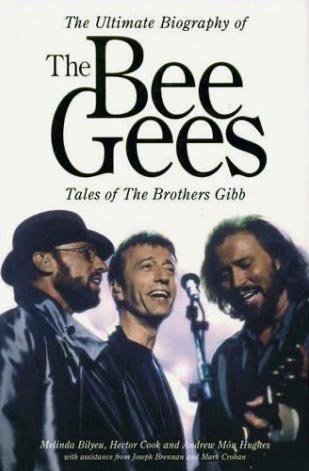
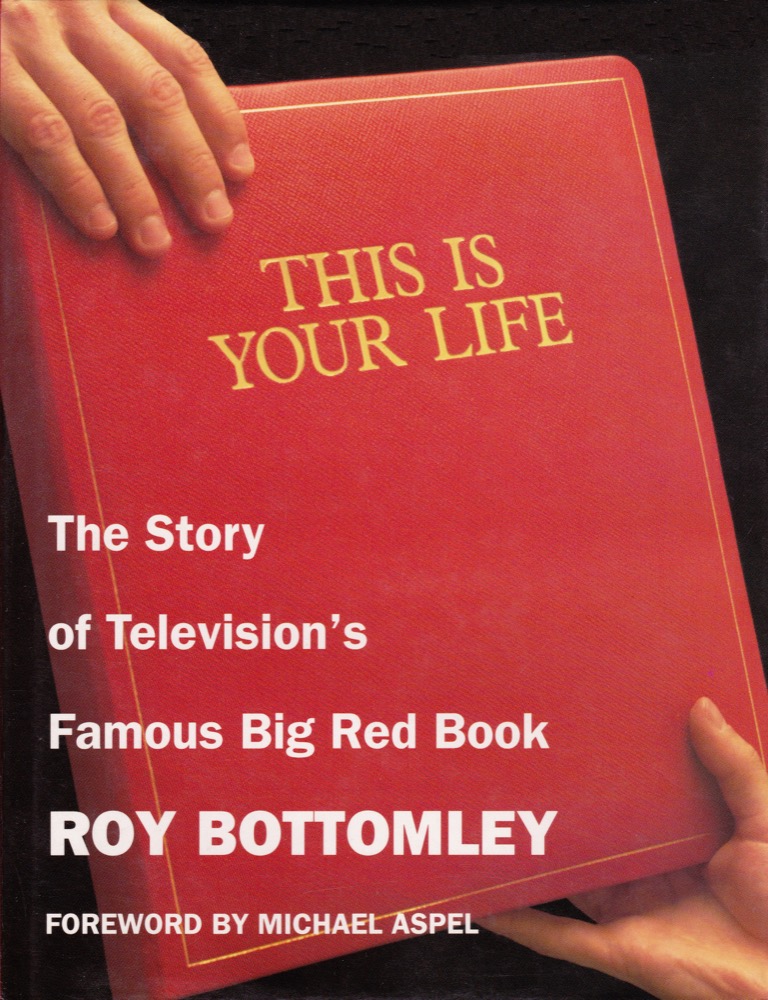
In February, 1991, The Bee Gees were under the impression that they were about to be filmed for a Channel Four documentary called A Day In The Life Of Steve Wright, appearing on the disc jockey's popular radio programme when television presenter Michael Aspel entered the studio with his requisite big red book and announced, "The Bee Gees, This Is Your Life."
"We always used to watch This Is Your Life as kids and wondered if we would ever be on it one day," Maurice said.
The brothers were whisked away to the television studio, where their families and friends were waiting to surprise them. As Hugh Gibb quipped, "It took a television show in England to get your mother away from the slot machines in Las Vegas." The programme didn't run to plan at first; the taping was delayed for 40 minutes when the projector malfunctioned. Frankie Howerd, Kenny Everett and Susan George were among the celebrities on hand to share their anecdotes about the group, with taped messages from Robert Stigwood, their sister Lesley and her family, as well as such luminaries as Barbra Streisand, Michael Jackson, Dionne Warwick, Kenny Rogers and Neil Sedaka, who was returning the favour from their appearance on his This Is Your Life.
Video clips of the very young Bee Gees from Australian television reduced the brothers to fits of embarrassed laughter, but the mood turned sombre as the focus shifted to Andy. Although disc jockey Bill Gates was there to represent the early days in Australia, it seemed odd that there was no sign of their Manchester friends, nor indeed any of the various band members who had worked with the group through the years. Considering The Bee Gees' long and prestigious history, to those not used to the show's low key format, it came over as a rather bland special on the band, although it was well received according to TV audience figures. The occasion also marked the last official appearance of Hugh Gibb.
The Bee Gees emigrated to Australia with their parents and found success. The family sailed there on August Bank Holiday 1958 on the £10 'assisted passage' scheme, brought in to encourage more British to settle in Australia. It more than paid for itself.
They were in the studio of DJ Steve Wright at Broadcasting House on the afternoon on 3 January 1991. On the turntable was their hit 'Got to Get a Message to You'. What they didn't know was that Michael Aspel was on his way with our special message.
For weeks, John Graham had been travelling to the Florida homes of Barry Gibb and his brothers, twins Robin and Maurice, conducting top-secret interviews with their wives. It was a well-kept secret, too, because when Michael Aspel walked into that radio studio the boys were dumbfounded.
'Jesus, I don't believe it!' yelled one, and buried his head in his hands. 'Stitched up like kippers!' shrieked another. The studio crew and producers burst into spontaneous applause as Michael delivered the line: 'Tonight, the Bee Gees, This Is Your Life.'
Outside, our limousine waited, engine ticking over, to take them to the studios at Teddington. Normally, on this journey, subjects are treated to a glass or two of champagne, but the Bee Gees do not touch alcohol and settled for diet coke. Michael Aspel travels separately, and for a good reason. Making idle chat during the journey he could easily let slip a surprise we have in store.
The Bee Gees' story spanned three decades of pop music, and the star names giving their personal tributes to the boys, not only as performers, but as composers, included Kenny Rogers, Dionne Warwick, Neil Sedaka, Diana Ross and Barbra Streisand.
Researcher Sue Green had been trying for weeks to get past the security screen surrounding Michael Jackson. On the morning of the programme her home telephone rang. It was Michael Jackson. He wanted to record a greeting there and then on her answering machine – but Sue hadn't a clue how to set it. 'I'll call back,' said Jackson. Luckily he did – because shell-shocked Sue hadn't taken his number.
Sue had also flown to Las Vegas, where the boy's parents, Hughie and Barbara were living. They came over. And Hughie's offstage line got a huge laugh from his sons: 'Do they realise it's taken an English TV programme to get your mother off the slot machines in Las Vegas?'
Barbara told how the boys were singing in harmony when they were still at infant school in England. And when the family emigrated they sang from the back of a lorry at Brisbane speedway track, where the crowd threw coins to them. Yet remarkably, the writers of hits like 'Massachusetts', 'Jive Talking,' 'How to Mend a Broken Heart' and so many more cannot read music.
Susan George, a long-time family friend, very kindly praised the way the programme handled a tribute to the boys' later brother, Andy, who had died at the age of only thirty, three years before.
For our final surprise we flew in the Brisbane DJ who had first talent-spotted the boys at the speedway track. His name was Bill Gates, and it was he who gave them the name the Bee Gees.

Series 31 subjects
Lord Brabourne | Graham Gooch | Norman Barrett | Richard Harris | Tracy Edwards | Stephen Hendry | Robert PountneyJimmy Savile | Evelyn Laye | Ernie Wise | Kenneth McKellar | Tom Gleave | Bernard Braden | Barry Foster | Carmen Silvera
Arthur Hailey | Tony Hatch and Jackie Trent | The Bee Gees | John Woodhouse | Evelyn Glennie | David Tomlinson
Dave Willetts | Harry Carpenter | Lionel Bart | Stan Richards | Lonnie Donegan