Big Red Book
Celebrating television's This Is Your Life





F Spencer CHAPMAN DSO (1907-1971)

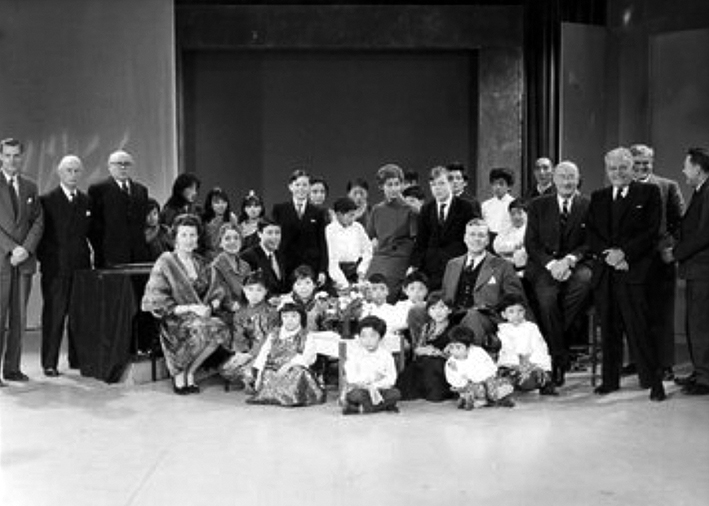
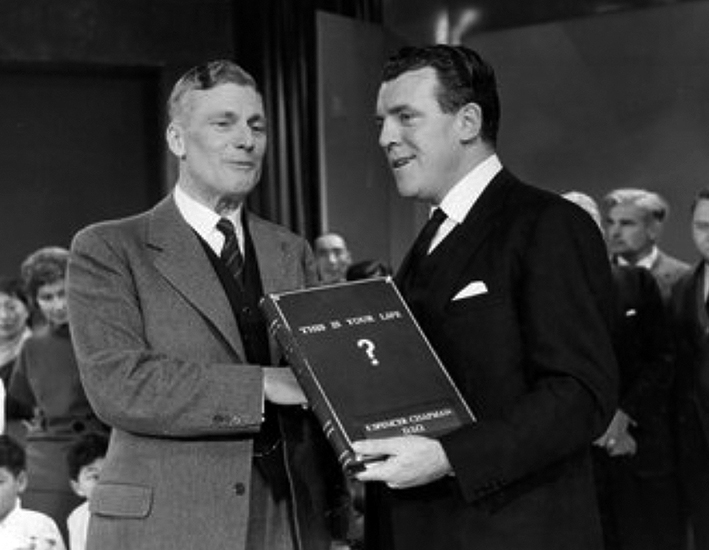
THIS IS YOUR LIFE - Frederick Spencer Chapman, teacher and former Army officer, was surprised by Eamonn Andrews at the BBC Television Theatre, having been led to believe he was there to meet his wife, who was working on a documentary.
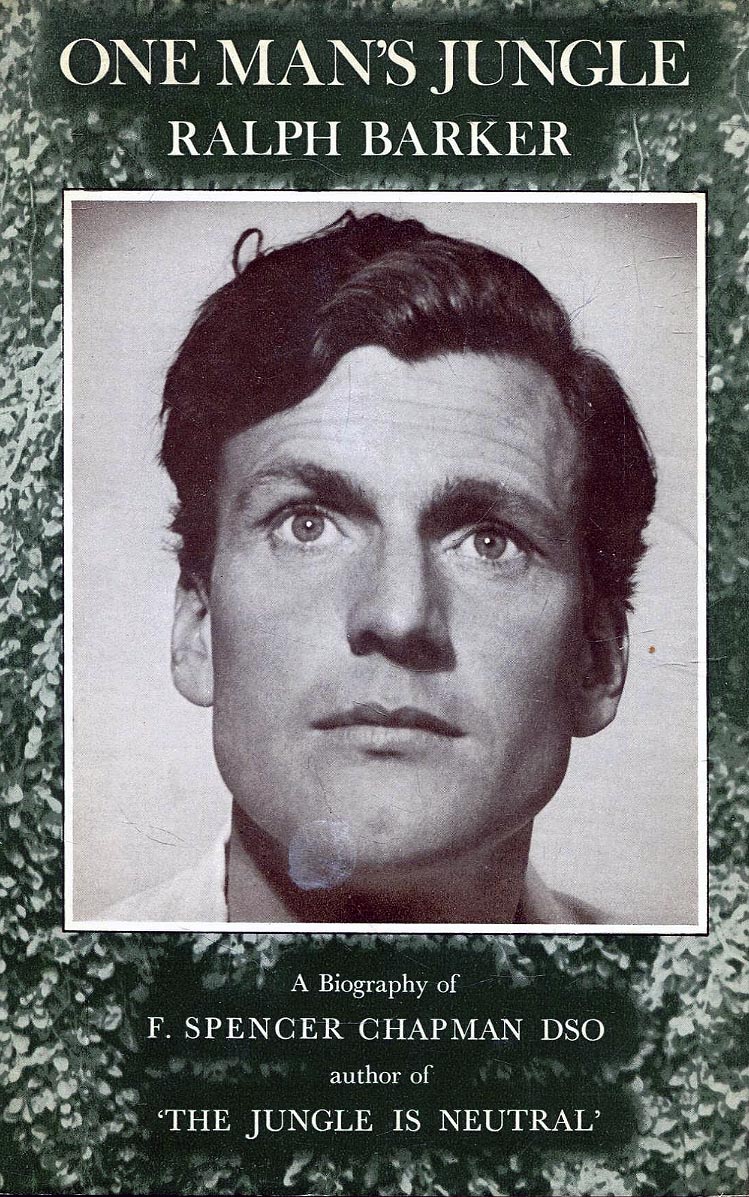
Freddie, who was born in London but raised in the Lake District, developed a passion for travel while at Cambridge University and completed several overseas expeditions by the mid-1930s. Having become a teacher at Gordonstoun in 1938, he joined the Seaforth Highlanders at the outbreak of the Second World War, and for three and a half years lived behind Japanese lines in the jungles of Malaya, and was later awarded the Distinguished Service Order for his actions in the Far East.
After the war, Freddie returned to teaching and founded a co-educational boarding school in Germany for the children of British Forces. In 1956, he took up the post of headmaster of a boys' school in Grahamstown, South Africa, before returning to the UK in 1961 to run the Pestalozzi Children's Village, an establishment for children of all nations, orphaned by the war.
Frederick Spencer Chapman was the second subject in series 9 whose story was told over two consecutive editions of This Is Your Life.
programme details...
- Edition Nos: 239 / 240
- Subject No: 239
- Broadcast date: Thu 2 Jan 1964
- Broadcast date: Thu 9 Jan 1964
- Broadcast time: 8.50-9.15pm
- Recorded: Mon 23 Dec 1963 8.00pm
- Venue: BBC Television Theatre
- Series: 9
- Editions: 13 - 14
on the guest list...
- Quintin Riley
- Edward Bingham
- John Sartin
- John Davis
- Richard Broome
- Nona Baker
- Faith - wife
- Valerie Searle
- Nicholas - son
- Stephen - son
- Christopher - son
- Sir Evan Nepean
- Tibetan children and their house parents
- Llama, Geishe Gyelzen
- Frank Quayle Filmed tributes:
- Robert - brother
- Dr Robert Corti
production team...
- Researcher: unknown
- Writer: unknown
- Director: Michael Goodwin
- Producer: Vere Lorrimer
- Executive Producer: T Leslie Jackson
saluting the armed forces
Photographs of Frederick Spencer Chapman This Is Your Life
Freddy became uncomfortably aware that there were elements within the organisation who would like to get him out. But the next conspiracy of which he was a victim was a pleasant one. On 23rd December 1963 he arrived at the BBC television studios in Wood Lane to be greeted, not by Faith as he expected, but by Eamonn Andrews: he was to be the subject of the ever-popular This Is Your Life. "For only the second time in nine years' history of this programme," Eamonn Andrews told viewers, "we are going to tell our story in two parts, since we cannot condense this epic story into the half-hour allotted to us." Among those who paid tributes to him during the first programme was Quintin Riley. "I had been working on the script with the BBC since the previous May," he says, "and the problem was to get Freddy to Wood Lane without giving the game away." Faith made the excuse that she was recording an interview for the BBC, and would Freddy, who was in London for the day, pick her up at eight o'clock? "Better still," she added, "I'll get the BBC to send a car for you." (Freddy had noted in his diary: "Faith to London for BBC T/V Wood Lane, 7.45.") A car duly picked him up and delivered him, and he was escorted to the studio. "I believe you've come to meet your wife," said a well-known voice. It was, of course, Eamonn Andrews.
"If he was embarrassed by being trapped for the cameras he didn't show it," said the Daily Mirror, "and certainly his life was worth peeping at." The programme, they said, had begun the New Year (the first half was shown on 2nd January 1964) in better style than for some time. "The extravagant phrases of the acting profession, often the subject of this programme, were noticeably absent." But the reviewer had doubts about the programme's morality. "I cannot believe that being caught by Eamonn Andrews and forced to make a snap decision comes under the heading of free will." Freddy though thoroughly enjoyed himself - as surely anyone but the recluse or the falsely modest would. "He knew nothing about it," says Riley, "but he acted as though he knew all about it. He took complete control." It is a pity that the recordings have apparently been destroyed.
The programme began with a film of the Pestalozzi children at their Christmas party and ended by remembering Freddy's mission to Lhasa of 26 years earlier, in one of many attempts to stop the threatened Chinese take-over which had since become a reality. ("Music: Tibetan Children Dance on and Bow.") The programme claimed to attract 12 million viewers, and it was the finest publicity that the village could possibly have. Yet there were some within the organisation who resented Freddy's success, and again it was hinted to him that the thought uppermost in his mind was not Pestalozzi but his own aggrandisement. Although Faith certainly pushed him forward at times, as most wives will, and although Freddy certainly coveted fame and status, this in its narrowest sense was never true of him. But the programme inevitably gave his personal reputation a boost, and he was still enjoying the backwash some months later. His driving was often the subject of criticism and banter within his family, and brushes with traffic police were not uncommon. "I was stopped by the police again last night!" he told Joss after visiting her at Rugby, where she had taken a job as matron. He had been on his way south from a lecture in York. "In the south-east suburbs of London, at midnight. I stopped at traffic lights and a policeman on a motor cycle pulled across my bows and asked me why I hadn't stopped when he had signalled me to do so. I told him, very apologetically and politely, that I hadn't seen him. He said I was doing over 50 in a 30-mile limit. He made me pull into the side of the road and demanded my insurance certificate and my driving licence. I produced the latter, saying I had no idea I was exceeding the speed limit and was only keeping up with the cars in front. He saw my Pestalozzi address and said 'Don't you have Tibetan children? I saw them on TV?' I told him about This Is Your Life and he returned my licence and said 'You're doing a wonderful job: we don't want to lose you,' and that was that."
Series 9 subjects
Stratford Johns | Alice Stern | Robert Boothby | Bessie Love | Joan Stanton | Harry Worth | John Dodd | Ralph ReaderAlbert Guerisse | Margaret Lockwood | Franklin Day | Frederick Spencer Chapman | Thora Hird | Evelyn Bark
Madge Watson and Elsie Wood | Petula Clark | Derek McCulloch | Bert Matthews | Ted Moult | Dot Palmer | Teddy Winn
Barbara Mullen | Paul Burrough | Sydney Scroggie | Ninette de Valois | Dominique Pire | Olivia de Havilland | Mary Hawkins